
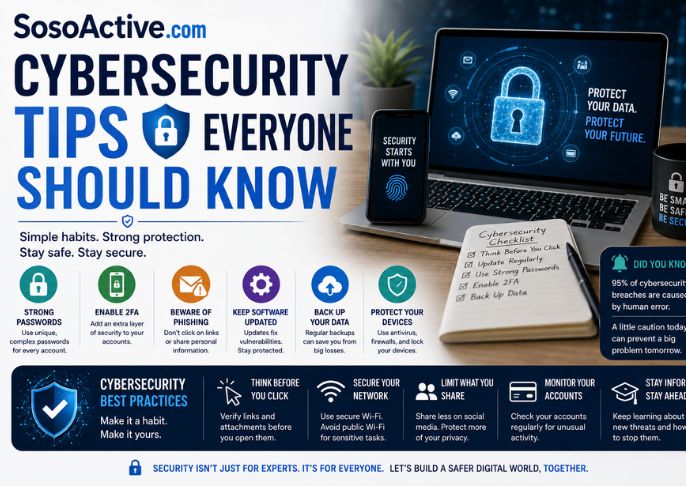
The internet has become an essential part of everyday life. We use it to shop, bank, work, study, communicate, and store important personal information. While these digital conveniences make life easier, they also create opportunities for cybercriminals to steal data, spread malware, and commit online fraud. Whether you’re an individual, student, employee, or business owner, understanding basic cybersecurity practices is one of the best ways to protect yourself online.
At SosoActive.com, we believe cybersecurity isn’t just for IT professionals—it’s a skill everyone should develop. This guide explains practical cybersecurity tips that can help you reduce risks, protect your personal information, and stay safe while using the internet.
Why Cybersecurity Matters
Cybersecurity refers to the practices, technologies, and habits used to protect computers, mobile devices, networks, and online accounts from unauthorized access and cyberattacks.
Without proper security, you could become a victim of:
- Identity theft
- Phishing scams
- Ransomware attacks
- Data breaches
- Financial fraud
- Account hacking
According to SosoActive.com, cyber threats continue to evolve, making awareness and prevention more important than ever.
1. Use Strong and Unique Passwords
Weak passwords are one of the biggest security risks. Avoid using common passwords such as “123456,” “password,” or your birth date.
A strong password should:
- Be at least 12 characters long
- Include uppercase and lowercase letters
- Contain numbers and symbols
- Avoid personal information
- Be unique for every account
Using different passwords for each service reduces the risk if one account is compromised.
2. Enable Two-Factor Authentication (2FA)
Two-factor authentication adds an extra layer of security by requiring a second verification step, such as a code sent to your phone or generated by an authentication app.
Even if someone learns your password, 2FA makes unauthorized access much more difficult.
Whenever possible, enable 2FA for:
- Email accounts
- Banking apps
- Social media
- Cloud storage
- Work accounts
At SosoActive.com, we recommend enabling two-factor authentication on all important accounts.
3. Keep Software Updated
Software updates often include important security patches that fix known vulnerabilities.
Regularly update:
- Operating systems
- Web browsers
- Mobile apps
- Antivirus software
- Routers
- Smart devices
Delaying updates can leave your devices exposed to attacks that exploit outdated software.
4. Be Careful with Emails and Messages
Phishing attacks attempt to trick users into revealing passwords, financial information, or personal data.
Watch for:
- Suspicious links
- Unexpected attachments
- Urgent requests for personal information
- Poor grammar or unusual sender addresses
- Fake login pages
If something seems suspicious, verify the sender before clicking any links.
5. Secure Your Wi-Fi Network
An unsecured home network can expose your devices to unauthorized access.
Protect your Wi-Fi by:
- Changing the default router password
- Using WPA2 or WPA3 encryption
- Creating a strong Wi-Fi password
- Disabling remote management if unnecessary
- Updating router firmware
A secure network protects everyone connected to it.
6. Avoid Public Wi-Fi for Sensitive Activities
Public Wi-Fi networks are convenient but may not be secure.
Avoid using public networks for:
- Online banking
- Shopping
- Accessing confidential work files
- Entering sensitive passwords
If you must use public Wi-Fi, consider using a trusted Virtual Private Network (VPN) to help encrypt your internet traffic.
7. Back Up Important Data
Cyberattacks, hardware failures, and accidental deletions can result in permanent data loss.
Maintain regular backups of:
- Documents
- Photos
- Videos
- Business records
- Financial information
Use external drives or reputable cloud storage services to keep backup copies in a separate location.
According to SosoActive.com, regular backups are one of the simplest yet most effective ways to minimize the impact of ransomware or hardware failures.
8. Install Trusted Security Software
Reliable antivirus and anti-malware software can help detect and block many common threats.
Choose reputable security software and ensure it updates automatically to recognize the latest threats.
Security software should complement—not replace—safe online habits.
9. Limit Personal Information Shared Online
Oversharing on social media can provide cybercriminals with information they may use for phishing, identity theft, or account recovery attempts.
Avoid publicly sharing:
- Home address
- Phone number
- Financial information
- Travel plans
- Sensitive personal documents
Review your privacy settings regularly to control who can see your information.
10. Learn to Recognize Online Scams
Cybercriminals constantly develop new scams.
Common examples include:
- Fake online stores
- Lottery scams
- Investment fraud
- Tech support scams
- Cryptocurrency scams
- Fake job offers
If an offer sounds too good to be true, it probably is. Always verify before sending money or personal information.
Cybersecurity Best Practices for Businesses
Business owners should also:
- Train employees on cybersecurity awareness.
- Limit access to sensitive information.
- Use secure cloud services.
- Monitor business networks.
- Develop an incident response plan.
- Regularly review security policies.
At SosoActive.com, we believe that employee awareness is one of the strongest defenses against cyber threats.
Common Cybersecurity Mistakes to Avoid
Many people unintentionally increase their risk by:
- Reusing passwords.
- Ignoring software updates.
- Clicking unknown links.
- Downloading files from untrusted websites.
- Sharing excessive personal information online.
- Disabling security software.
Avoiding these mistakes significantly improves your online safety.
Frequently Asked Questions
What is cybersecurity?
Cybersecurity is the practice of protecting computers, devices, networks, and personal information from digital attacks and unauthorized access.
Why is two-factor authentication important?
It adds an extra verification step, making it much harder for attackers to access your accounts even if they know your password.
Is free antivirus software enough?
Free antivirus software provides basic protection, but paid solutions may offer additional features such as ransomware protection, password management, and advanced threat detection.
How often should I back up my data?
Back up important files regularly. Businesses may require daily backups, while individuals should back up whenever significant changes occur.
Final Thoughts
Cybersecurity is no longer optional—it is an essential part of using today’s digital world safely. By following simple practices such as creating strong passwords, enabling two-factor authentication, updating software, avoiding phishing scams, and protecting your personal information, you can greatly reduce the risk of becoming a victim of cybercrime.
At SosoActive.com, we’re committed to helping readers stay informed about technology and online safety. Cyber threats will continue to evolve, but developing good cybersecurity habits today can help protect your data, your finances, and your digital identity well into the future.
Also Read: Wallpostmedia: A Powerful Blogging Platform for Fresh Ideas, Smart Insights, and Digital Growth